
Products
- PEM hydrogen production system
- electrolyzer
- hydrogen generator
- hydrogen production system
- hydrogen-oxygen machine
- 10KW Integrated Solar Hydrogen Production and Storage Solution
- Hydrogen powered motorcycle controller
- Solar hydrogen production system
- Photovoltaic hydrogen production system
- Photovoltaic power generation hydrogen production and refueling
- Hydrogen production-hydrogen storage-hydrogen refueling integrated platform
13302259281

Classify
- Company News
- Industry News
Industry News
Hydrogen Fuel Cell Industry Acceleration: Multi-Scenario Applications Explode from Transportation to Industry
2026-07-21
Hydrogen Fuel Cell Industry Acceleration: Multi-Scenario
Applications Explode from Transportation to Industry
As the global transition to green energy deepens, the hydrogen energy industry is entering a critical phase of large-scale application. Global practices indicate that the hydrogen energy and fuel cell industry is transitioning into a more mature, pragmatic stage of development. Globally, hydrogen fuel cell technology continues to iterate and upgrade. The Proton Exchange Membrane (PEM) route has become the mainstream technical direction due to its fast startup and stable operation. Concurrently, system costs continue to decline, power density is steadily improving, and supply chain supporting facilities are becoming increasingly comprehensive. The application market is also gradually breaking free from the constraints of a single track. Demand for diverse scenarios—such as stationary power generation, off-grid power supplies, special electric vehicle power packs, and industrial backup power—is being released rapidly. Multiple countries across Europe, the Americas, Southeast Asia, India, and South Korea have introduced supportive policies for hydrogen energy, ramping up their layout for fuel cell power generation system projects, which continuously accelerates commercial implementation. At the recently concluded World Fuel Cell Conference, industry experts from around the globe consensus-built that the global hydrogen industryis emerging from its trough and entering a phase of large-scale, upward
growth.
I. Basic Principles and Core Advantages of Hydrogen Fuel Cells
A hydrogen fuel cell is a power generation device that directly converts the chemical energy of hydrogen and oxygen into electrical energy. Its basic principle is the reverse reaction of water electrolysis: hydrogen and oxygen are supplied to the anode and cathode respectively. After hydrogen diffuses outward through the anode and reacts with the electrolyte, it releases electrons that reach the cathode through an external load. In this process, hydrogen reacts with oxygen to generate water, producing electrical energy as a byproduct.

The product possesses three prominent advantages:
Zero Pollution: Hydrogen fuel cells rely on electrochemical reactions to do work, which differs from fuel combustion andtraditional
battery energy storage modes. While fuel combustion releases pollutants like COx , NOx , SOx , and dust, fuel cell
operation yields only water and heat. When paired with green hydrogen production methods such as solar and wind power, the
entire industry chain can achieve zero harmful emissions.
Low Noise: The operating noise of the equipment is around 55dB, which is equivalent to the volume of daily conversation. This
makes it highly adaptable to noise-sensitive scenarios like indoor server rooms, quiet factory zones, and civilian special electric
vehicles.
High Efficiency: The energy conversion efficiency can exceed 50%. By skipping intermediate conversion steps like thermal and
mechanical energy, it directly converts chemical energy into electrical energy, with a comprehensive efficiency far exceeding
that of traditional generator sets.
II. The Global Hydrogen Industry Enters a New Stage of Ecological
Synergy
Industry insiders believe that the competitive logic in the hydrogen sector has upgraded from single-product competition to full-chain ecological competition. Strengthening international cooperation and sharing new opportunities for innovative development in hydrogen energy was a common consensus among many participating enterprises and institutions at the conference.
"Global cooperation in the hydrogen industry still needs further deepening," said Stefan Schwager, Director of the Climate and Technology Cooperation Division at the United Nations Industrial Development Organization (UNIDO).

Currently, industries such as steel, fertilizer, computing power, industrial power supply, and new energy facilities all have massive demands for hydrogen. UNIDO has launched a global hydrogen cooperation project to build a transnational industrial cooperation platform. At the exhibition, application scenarios for hydrogen energy widened across the board. Beyond traditional transportation equipment, technological implementation was achieved in aviation, logistics drones,stationary energy storage, industrial backup power generation, and specialelectric vehicle power packs, attracting numerous overseas manufacturers to negotiate cooperation.
Hyundai Motor Group (South Korea): Li Rhena, Deputy General Manager of the Energy and Hydrogen Business Division, mentioned that the enterprise is continuously deepening its localized footprint, hoping to rely on transnational collaboration to broaden hydrogen application scenarios and improve the global industrial ecosystem.
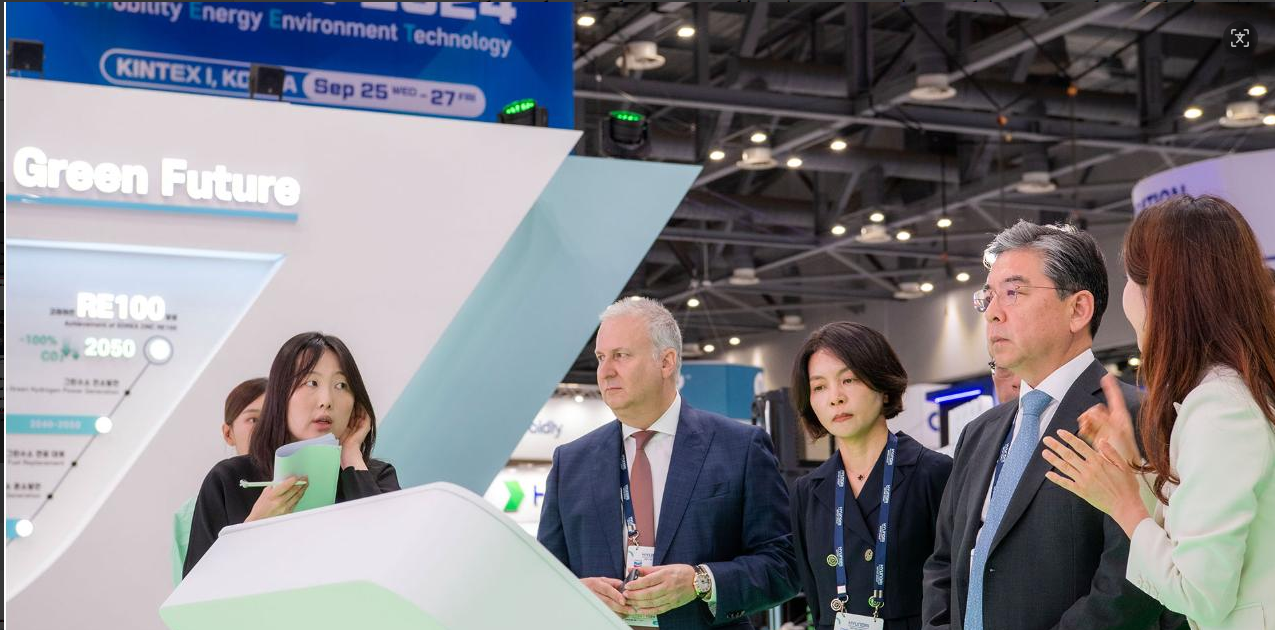
India Green Hydrogen Organization: CEO and Director Nishaanth Balashanmugam introduced that India is vigorously
developing its green electricity and carbon fiber industries while simultaneously advancing hydrogen retrofits in the steel, cement, and cable sectors. The organization is eagerly seeking global technology and equipment partners.
III. Outlook for Industry Development
From technological iteration to cost reduction, and from policy support to market expansion, the global hydrogen fuel cell industry is at a critical juncture transitioning from demonstration applications to large-scale commercialization. With the continuous expansion of diverse scenarios such as stationary power generation, industrial backup power, special
electric vehicle power packs, and off-grid energy storage, hydrogen fuel cells are shedding their dependence on a single track and gradually integrating into the green transformation process of energy, industry, transportation, and other sectors. The general industry consensus is that despite ongoing challenges regarding infrastructure supporting facilities and initial costs, the long-term growth trend of the hydrogen fuel cell industry has been firmly established, driven doubly by global carbon neutrality goals and continuous technological progress. In the future, as supply chain synergy
continues to deepen and international cooperation strengthens, hydrogen fuel cells are expected to achieve commercial breakthroughs in more fields, becoming an indispensable and vital component of the global clean energy system.
- Previous:Already the first article
- Next:Already the last article

Scan the QR code to follow on WeChat
Scan the QR code to follow on WeChat